The Entryway Reset That Keeps the Whole House Calmer
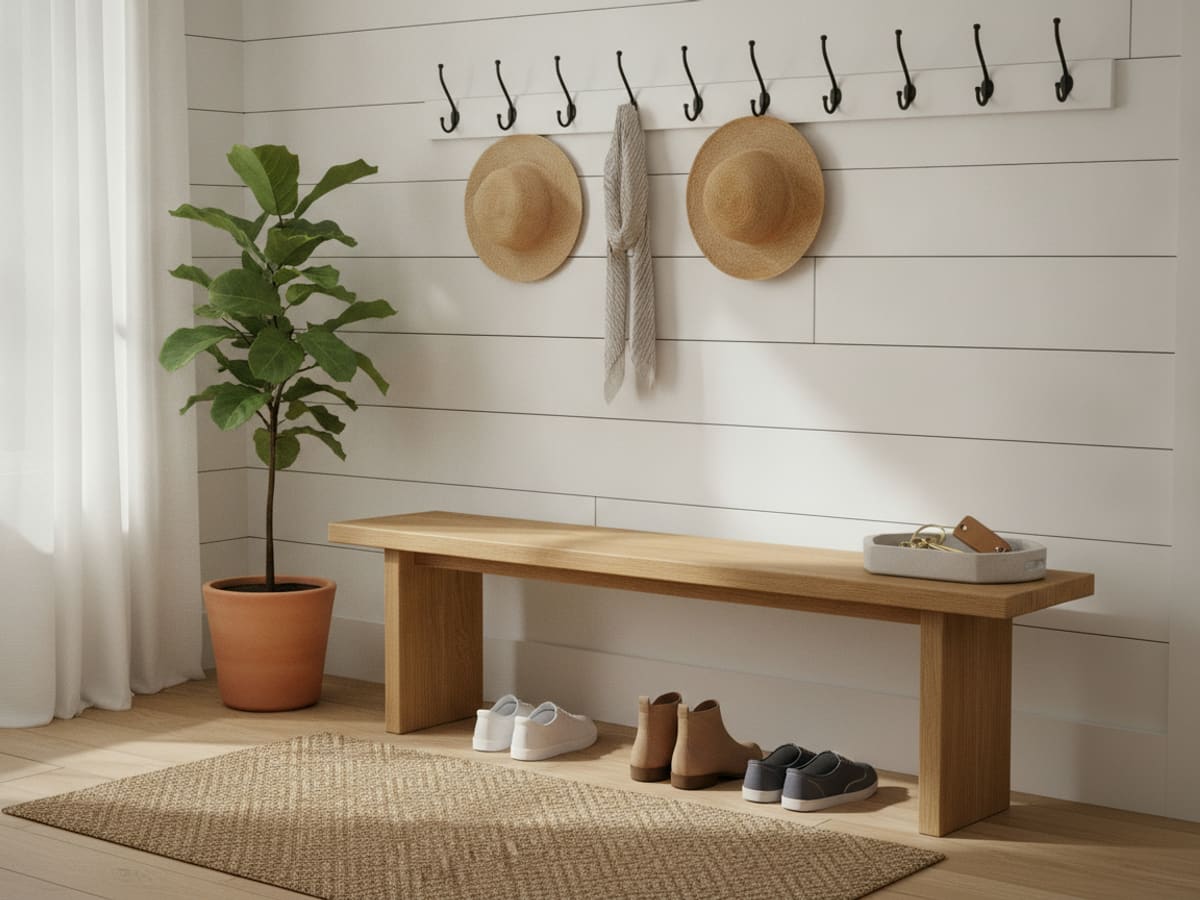
The spot by your front door sets the tone for the rest of the home. A short reset there can keep clutter from spreading room to room.
Why entryways collect so much
The area by your door is the first place you set things down and the last place you think about. You walk in with your hands full, and the nearest flat surface or empty floor space becomes a landing spot. Shoes come off, bags drop, keys and mail get set down "just for a minute."
Nothing is wrong with you or your household. An entryway simply does a lot of jobs at once: it's a drop zone, a storage area, a sorting station, and a goodbye spot. When the space has no clear system, clutter fills the gaps.
The good news is that a small, well-planned reset can change how the whole area works. You don't need a renovation. You need a few decisions and a couple of simple tools.
Deciding what actually belongs there
Start by pulling everything out of the entry area and setting it on the floor or a nearby table. It looks worse for a few minutes, but it lets you see what has been quietly accumulating.
Then sort each item into one of three groups:
- Belongs here: things you grab or drop every day, like current-season shoes, keys, a daily bag, and a few reusable shopping totes.
- Belongs elsewhere: things that wandered in, like a library book, a sweater, or a package of light bulbs.
- Doesn't belong anywhere: expired coupons, broken umbrellas, shoes no one wears.
Be a little strict with the first group. A good rule of thumb is one pair of everyday shoes per person near the door, with the rest stored in a closet or bedroom. The less you ask the entryway to hold, the easier it is to keep tidy.
Take the "belongs elsewhere" pile and return it right away, while you're still in the mood. Otherwise it tends to migrate back.
Hooks, trays, and one good basket
Once you know what stays, give each category a specific home. Think vertical first, since floor space near a door is limited.
- Hooks: Wall hooks at a height everyone can reach handle coats, bags, and leashes. Mount them to studs or use proper wall anchors so they hold up under weight.
- A shoe tray or mat: A boot tray with a lip contains mud, slush, and grit. It also draws a visible boundary for where shoes go.
- A small dish or tray for keys: A shallow dish on a shelf or console gives keys, sunglasses, and loose change a landing spot that isn't the floor.
- One good basket: Pick a single basket or bin for the odds and ends that don't have a hook, such as hats, gloves, or a dog's walking gear. One container is the key. It has a built-in limit, so when it's full, it's time to sort.
If you have kids, hang a hook or set a low bin at their level. Children are far more likely to put things away when they can reach the spot without help.
A two-minute daily habit
A system only works if it's easy to maintain. The simplest habit is a quick reset once a day, ideally at the same time, like right after dinner or just before bed.
- Put shoes back on the tray or in their spot.
- Hang up any coats or bags that landed on a chair or the floor.
- Empty the basket of anything that doesn't belong in it.
- Move any stray items to the room where they live.
That's it. Set a timer if it helps, and you'll likely find it takes less than two minutes. The point isn't a perfect entryway. It's preventing small drops from turning into a weekend project.
Some households like to attach the reset to an existing routine, such as turning off the lights for the night. Pairing a new habit with an old one makes it easier to remember.
Handling mail and paper
Paper is usually the stubborn part of the pile. It arrives daily, looks harmless, and then spreads across every flat surface.
The best approach is to deal with mail at the moment it enters the house, or very close to it. Place a small recycling bin or paper bag near the door and sort standing up. Junk goes straight in. Anything that needs action goes in a single tray or a wall-mounted file.
Keep that action tray small on purpose. If it overflows, it's a sign to spend ten minutes paying, filing, or tossing. Many people pick one day a week as their paper day, so the tray never grows into a stack.
For things you want to keep, like important documents, move them out of the entryway into a labeled folder or drawer elsewhere in the house. The entryway is a sorting spot, not an archive.
If you'd rather cut down on paper at the source, many senders let you switch to electronic statements and notices. That's a matter of personal preference and what works for your accounts.
Seasonal swaps without the pile
Coats, boots, umbrellas, and sandals take turns being essential. The trouble starts when everything stays out year-round.
Pick two times a year, perhaps when the weather noticeably shifts, to rotate your entryway. Pack away off-season items in a bin or closet shelf, and bring out what you'll need now. Take that moment to check whether things still fit and still work.
A few small habits help:
- Wash or wipe boots and bags before storing them, so they're ready next time.
- Keep the off-season bin labeled and in a spot you can reach without a ladder.
- Let go of anything you didn't use all season.
If your entryway has very little room, a slim bench with storage inside or a tall narrow shelf can hold the current season while the rest stays out of sight.
A calmer entryway doesn't come from buying more organizers. It comes from deciding what belongs, giving it a home, and taking a couple of minutes each day to put things back. The rest of the house tends to feel quieter as a result.